
How Elmhurst, Illinois Got Its Name
Before it was Elmhurst, this town was called Cottage Hill. The name came from a tavern and stagecoach stop that a settler named Gerry Bates built in 1843, and it stuck for more than tweny years. If you like knowing why a place is called what it’s called, this is one of the better local stories, and you can still walk the same streets.
It started with a tavern on St. Charles Road
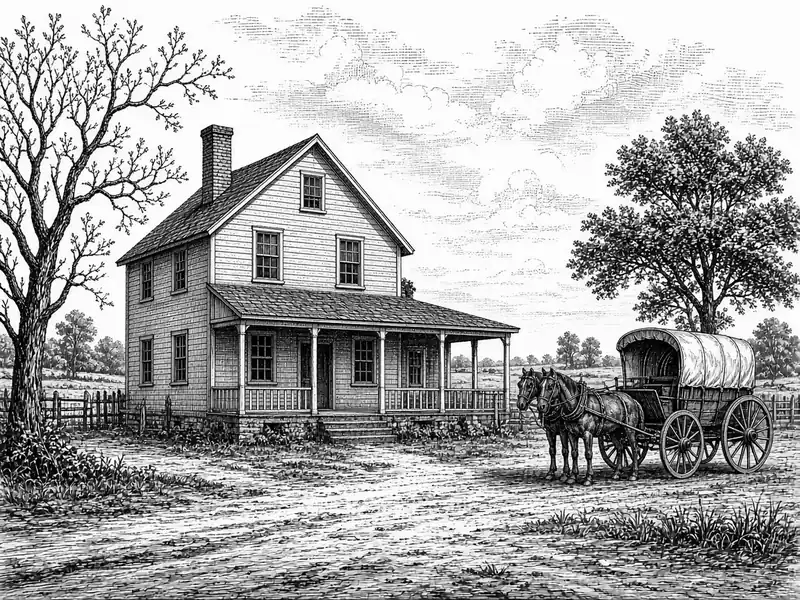
Gerry Bates came here from Ohio and built a place he named Hill Cottage. It sat near what is now Cottage Hill Avenue and St. Charles Road. St. Charles Road was an important overland route at the time, so the building did a lot of work. It was a home, a tavern, a stagecoach stop, and, by 1845, the first post office in town. People started calling the whole area Cottage Hill, after the inn.
A plaque later marked the original spot. It notes that the tavern was built in 1843, the post office opened in 1845, and the building was moved to 413 S. York Street in 1891. The plaque itself was dedicated in 1936. It’s a small thing, but I like it. You can stand there and picture wagons on St. Charles Road before the railroad took over.
The railroad moved the center of town
The Galena and Chicago Union Railroad arrived in 1849, and that changed everything. Bates offered the railroad a right-of-way through his land if they would put the depot at the center of his property, where the tracks met York Road. That was a smart deal. He then put a general store across from the station and moved the post office there. The town’s center slid toward the tracks, which is why downtown still feels tied to the train.
In 1853, Bates platted a subdivision called Cottage Hill on the north side of the tracks, between York Street and Addison Avenue. That plat became the core of the future downtown. If you walk York Street today, you’re walking through that early plan, even if the storefronts have changed a hundred times since then.
Why the name became Elmhurst
By the late 1860s, Cottage Hill was growing, but the name was getting awkward. The Elmhurst History Museum notes that mail was sometimes mixed up with other places that had similar names. Thomas Barbour Bryan, a local landowner and civic leader, gathered townspeople and suggested a new name: Elmhurst. City records say the community took that name in 1869. The U.S. postal service made the change official in 1870.
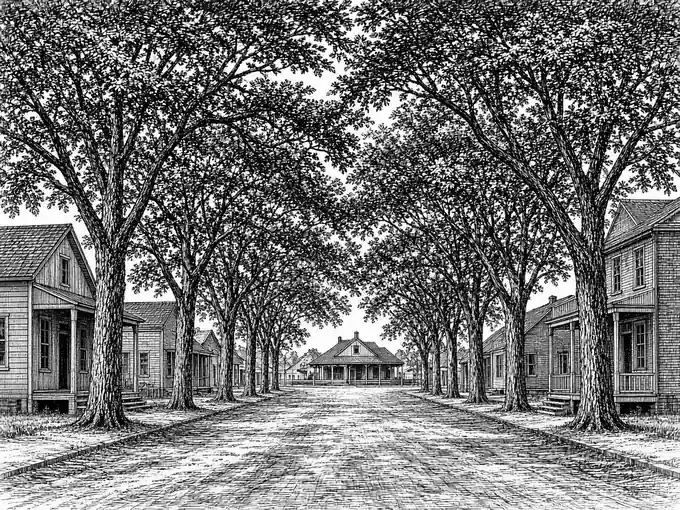
The new name wasn’t random. Bryan and his family had been planting elm trees around town. His brother-in-law, Jedediah H. Lathrop, is also credited with planting a long stretch of elms along Cottage Hill. “Hurst” is an old word for a wooded hill or grove, so Elmhurst basically means a place of elms. Many of those elms later died of disease, which is one reason Elmhurst University turned its campus into an arboretum in 1966. The school wanted a wider mix of trees so the landscape wouldn’t depend on one kind.
Bryan did more than rename the town. His family sold land that became the school now known as Elmhurst University, founded in 1871 as a seminary. If you walk the campus today, you’re on ground tied to the same period as the name change.
From village to city
Elmhurst incorporated as a village in 1882. Henry Glos, a local businessman, was elected the first village president. The History Museum now occupies his family’s house, Glos Mansion, at 120 E. Park Avenue. The town became a city in 1910. Those dates help put a visit in order: first the name, then the village, then the city, then the downtown you see now.
A good short outing is to walk from the Metra station toward York Street, then over to the history museum. Look at the old photos inside and then step back outside and try to match a street view. The names on the signs will make more sense once you know Cottage Hill came first. The elms that inspired the new name are mostly gone, but the name stuck, and the streets still follow that early map. Hours can change, so check the museum page before you go. Admission to the museum is free, with donations welcome.
Sources and visitor information
Hours and prices can change. Check the official page before you go.
More about Elmhurst
What people say about Elmhurst
No comments yet. Know Elmhurst? Share a favorite park, place to eat or memory.